





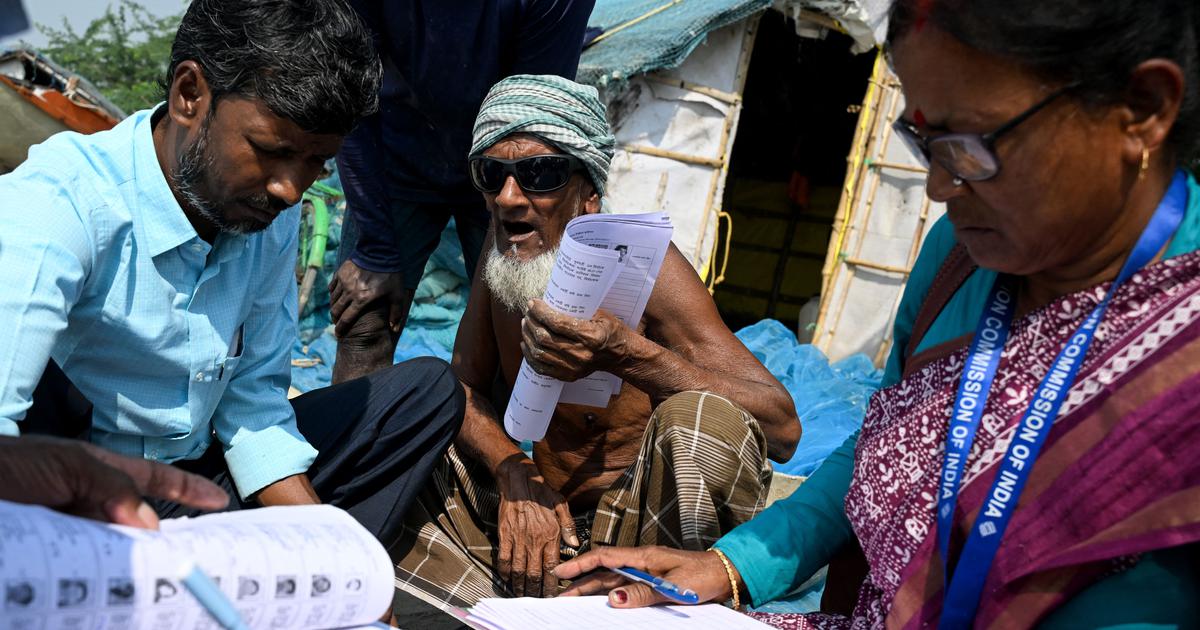
In January, the Booth Level Officer of my village in West Bengal’s Purba Bardhaman district rang me with a routine request: could I meet him to submit copies of my passport for verification under the Special Intensive Revision – the Election Commission of India’s sweeping audit of the state’s electoral rolls? I handed them over to him at the local tea stall.
Two weeks later, our family had our scheduled hearing at the Khandaghosh BDO office with the assistant electoral registration officer and the booth level officer about our names on the rolls. I attended by video call from Manchester, where I work. I had every reason to feel confident. I had submitted my passport, my father’s passport and land ownership records predating Independence. What more could the state possibly require of us?
Quite a lot, it turned out. As I made plans to return to India this month, intending to vote in the assembly elections before travelling onward for academic engagements, I discovered that my family of four – my father, two siblings and myself – had been erased from the electoral register.
We were not alone. According to the independent Sabar Institute, approximately 91 lakh names have been deleted from West Bengal’s voter list. This happened in three phases. Around 58 lakh names were deleted in December with the publication of the draft electoral roll; a further 5 lakh in the “first final list” in February; and 27 lakh more between late March and early April, classified under the elastic category of “logical discrepancies”.
The category of “logical discrepancies”, which is being used for the special intensive revision only in West Bengal, has resulted in names being deleted because of a mismatch with the spelling of their parents’ names, the age gap between parents and children that is considered low, or because parents have more than six children.
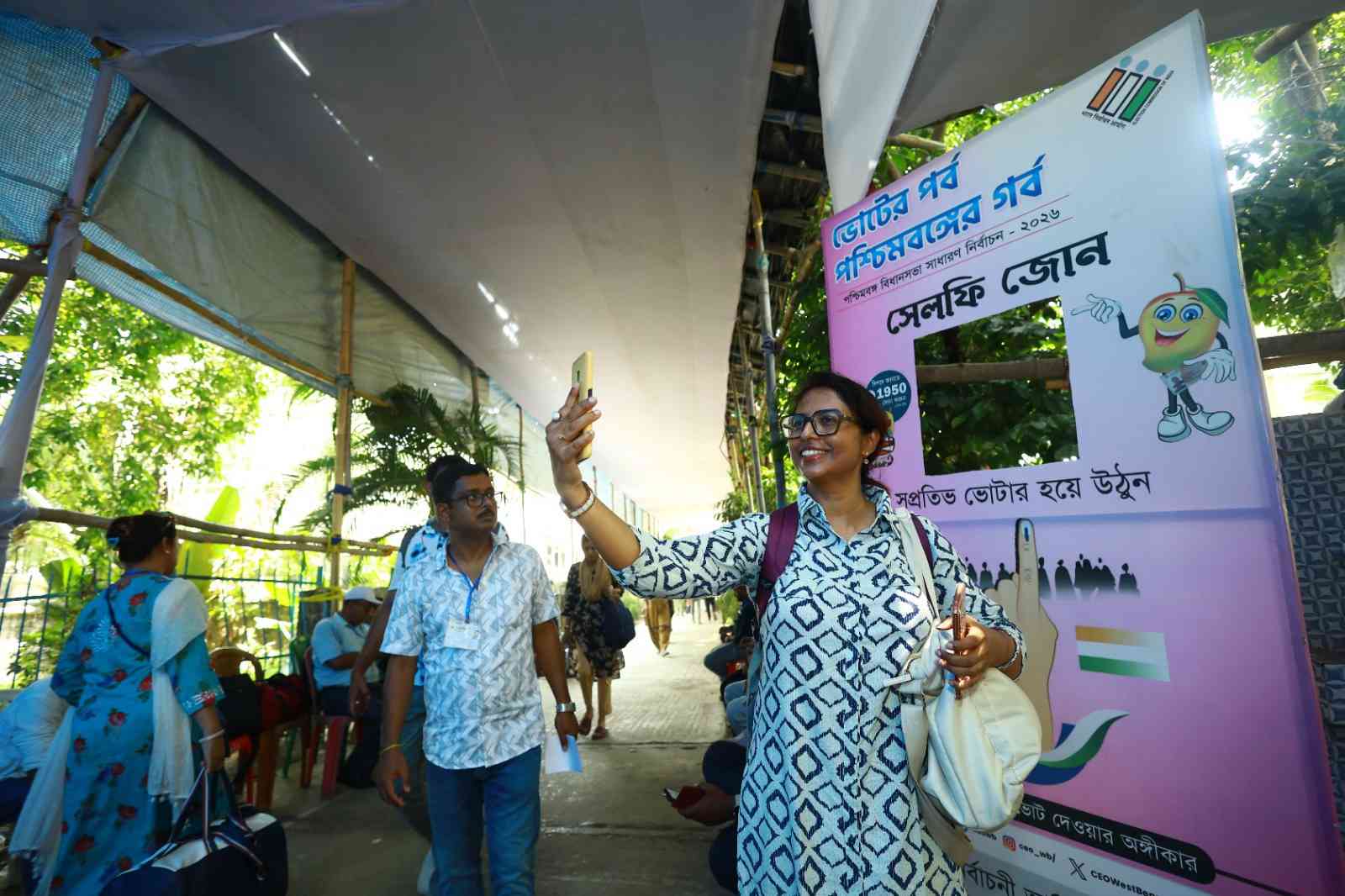
According to Sabar Institute, even accounting for genuine deletions – about 24 lakh voters who have died and 15 lakh-20 lakh people who permanently shifted – about 45 lakh to 50 lakh of the names removed from the rolls in West Bengal are living, eligible people with every legal and moral right to participate in Indian democracy.
When I spoke to people in and around Khandaghosh in Purba Bardhaman, I encountered a scale of disenfranchisement that no set of statistics can adequately convey.
Among those struck off from the rolls was Golehara Begum, an 85-year-old widow I have known since I was a child. Begum has survived on the charity of neighbours. As documentary proof of her existence in this republic, she possesses only a voter card and an Aadhaar number. She has no land records, passport or paper trail compatible with the proof the Election Commission’s algorithms apparently demand.
She is, by any ordinary measure of belonging, more rooted in Bengal than most: her family’s presence in these villages predates the formation of the state itself. Yet under this revision, she has been classified – implicitly, bureaucratically – as suspect.
The overall deletions across West Bengal disproportionately affected Muslims like Begum, who account for 60%-65% of the deleted names, according to Sabar Institute. If the names of Dalits, Adivasis and other marginalised communities who have been deleted as counted along with Muslims, they all account for 90% of those wrongfully removed in the rural assembly constituency, according to this map prepared by the Sabar Institute.
The media coverage of the crisis has resolutely remained focussed on the individual and the anecdotal: the retired civil servant inexplicably deleted, the local politician forced to re-register, the statistical curiosity of a particular booth or region. There has been little sustained examination of the logic that produced these outcomes.
How did the Election Commission of India, a body whose independence is constitutionally mandated and historically celebrated, come to deploy artificial intelligence tools in a manner that systematically disadvantaged the most vulnerable sections of the electorate?
By what institutional reasoning was a verification process designed so that those with the fewest documents – precisely those whose precarity the democratic system ought to be most zealous in protecting – became the easiest to delete?
Glimpse of integrated District control room for media monitoring for #WBLA2026 at Dakahin Dinajpur District West Bengal. #WBLA2026 #DistrictControlRoom @ECISVEEP@SpokespersonECI@PIBKolkata@airnews_kolkata @DM_DDinajpur pic.twitter.com/NzkAEGBAfK
— CEO West Bengal (@CEOWestBengal) April 22, 2026
In January, West Bengal Chief Minister Mamata Banerjee wrote to the Election Commission claiming that the errors were the result of Artificial Intelligence tools being used to delete voters’ names. The same logic that presents algorithmic digital governance as neutral and efficient also insulates it from the kind of accountability that is implicit in human decision-making, however flawed.
When a booth-level officer makes a wrongful deletion, there is a face, a chain of command, a mechanism of redress. When an algorithm classifies a Bengali Muslim widow as a “logical discrepancy”, the process is opaque, remote, and apparently beyond appeal.
In the 1970s, postcolonial theorists described how colonial relations were reproduced within the boundaries of the nation-state. They showed how peripheral communities – rural populations, and historically marginalised groups – were subjugated by urban, educated and institutionally empowered elites. With the special intensive revision, it would seem that something similar is underway. But instead of colonial intermediaries, the exercise of control is being carried out through centralised algorithmic digital governance.
The political narrative that has enabled this process is well established. Hindutva supporters have reframed Bengali Muslims as a demographic threat and “infiltrators” from Bangladesh.
Ironically, many names of members of the Matua community, primarily Dalit Hindu refugees from Bangladesh, have also been deleted. The Bharatiya Janata Party has repeatedly promised them Indian citizenship under the controversial Citizenship Amendment Act. This act from 2019 introduced a religious element into Indian citizenship law. Together with a planned National Register of Citizens of “genuine” Indians, these instruments are being used to threaten Bengali Muslims in West Bengal.
The special intensive revision effaces the deep roots of many communities in Bengal – roots that, in many cases, precede the modern states of either India or Bangladesh. It also transforms bureaucratic exclusion from a failure of democracy into an instrument of democracy: a mechanism by which genuine citizens are distinguished from presumed interlopers.
The Election Commission has insisted that the special intensive revision process is routine and legally mandated. The courts have agreed. But legality and legitimacy are not synonyms. The question at stake here is what kind of democracy India is becoming and who, in that democracy, counts.
I think of Golehara Begum at her humble home in Purba Bardhaman, and I think of her erasure: silent, administrative, bloodless, and for that reason all the more difficult to resist. India is becoming a nation in which voters are removed by mechanisms that mistake documentation for belonging and algorithmic arbitrariness for democratic legitimacy.
The world’s largest democracy cannot mistake the disappearance of over a half a million citizens from its electoral rolls as a technical problem awaiting a technical fix. It is a political problem and it demands a political reckoning.
The author is an academic based at the University of Manchester, UK. He grew up in Purba Bardhaman district, West Bengal. The views expressed in this article are his own.
